March 19, 2026
Get science-backed answers to your potato nutrition questions
Should you eat the skin on potatoes? Are all the nutritional benefits of a potato in the skin? Which is more nutritious—potatoes with or without the skin?
These are some of the most common questions about potato nutrition and where nutrients are found.
Yes, you can eat the skin on potatoes, and yes, there are nutritional benefits to eating potatoes with or without the skin. In fact, most of the potato’s nutrients are in the flesh.
So, what does this mean for you? Quite simply: Eat your potatoes however you enjoy them. This versatile, nutrient-dense vegetable can be a star of your plate at breakfast, lunch, dinner, and snack time.
Read on for:
- Science-backed expertise on potato skin and flesh nutrition
- How to wash and prepare your skin-on potatoes
- Answers to frequently asked questions about potato nutrition, safety, and prep
Are all the nutrients in the skin of the potato?
No. The only nutrient that’s significantly reduced by removing the potato’s skin is fiber, and even then, half of the fiber is in the flesh. Most other nutrients are found in more significant quantities in the flesh of a potato, not the skin.
For example, potassium and vitamin C are found predominantly in the flesh of the potato. A medium (5.3 oz) potato with the skin contains 620 mg of potassium and 27 mg of vitamin C. Removing the skin eliminates approximately 150 mg of potassium and 4.5 mg of vitamin C.
What are the Nutritional Benefits of Potatoes?
Simply put, potatoes are a nutrient-dense vegetable with the extra bonus of being delicious and easy to include in any diet.
The nutrition benefits of potatoes* include:
Vitamin C:
Potatoes are an excellent source of vitamin C, providing 27 mg, which is 30% of the recommended daily value. Vitamin C is an essential nutrient found in fruits and vegetables.
Vitamin C supports collagen production, immune health, iron absorption, gum health, and wound healing. It also acts as an antioxidant, helping stabilize free radicals and protect cells from damage.
Potatoes contain more vitamin C than one medium tomato or sweet potato.
Vitamin B6:
Potatoes are a good source of vitamin B6, providing .2 mg or 10% of the recommended daily value. Vitamin B6 helps your body metabolize proteins and carbohydrates and is essential for producing hemoglobin, a key component of red blood cells.
Potassium:
Potatoes have 620 mg of potassium per serving, which is 15% of the recommended daily value. In fact, a medium-sized potato has more potassium than a medium-sized banana!
Potassium is an essential mineral and electrolyte that supports muscle, heart, and kidney function and nerve transmission. The standard American diet is typically low in potassium, and it has been identified as a nutrient of public health concern.
You lose potassium in your sweat, so if you have a physical job or are active—you’ve got another reason to add potatoes to your diet.
Iron:
A potato provides 6% of your recommended daily value of iron. You need this essential mineral to make hemoglobin, a red blood cell protein that moves oxygen from your lungs throughout your body, and to make some hormones.
Fiber:
The potato flesh has 1 g of fiber, and a skin-on potato has 2 g of fiber. While potatoes are not a high source of fiber, they do contribute to your overall daily fiber intake—something most of us do not get enough of.Fiber has numerous health benefits, including regulating blood glucose, improving your blood lipid levels, and helping you feel satiated or full.
Potatoes are one of the most affordable sources of fiber when compared to other vegetables, making them easier to include in your grocery cart and meals.
Carbohydrates:
Potatoes have 26 grams of carbohydrates per serving, giving you 9% of the recommended daily value. Carbohydrates are an essential macronutrient and your body’s primary fuel source. Every component of your body—from your muscles and brain to your heart, organs, and digestive system—requires carbohydrates to function.
Protein:
Potatoes have 3 grams of protein per serving. Protein is an essential macronutrient that is getting a lot of buzz these days—for good reason.In addition to supporting muscle, tendon, ligament, and connective tissue health, protein plays a role in metabolic processes, fluid and electrolyte balance, and transporting key substances throughout your body.
What are the Nutritional Benefits of Potato Skin?
Potato skin mostly has fiber and antioxidants with some potassium and vitamin C, but removing the skin doesn’t significantly reduce a potato’s nutrients.
The nutrition benefits of potato skin include:
Dietary Fiber:
A medium potato with skin on has 2 g of dietary fiber. This is 7% of the daily recommended value.
Most of us don’t consume enough fiber—a vital nutrient that has been shown to have numerous health benefits, including improving blood lipid levels, regulating blood glucose, and increasing satiety (makes you feel full longer), which may help with weight management.
Antioxidants:
The primary antioxidants in potato skin include flavonoids, phenolic acids, and carotenoids, with red and purple potato skins providing anthocyanins.Antioxidants help protect your body’s cells from damage caused by free radicals, which can build up naturally over time. Potatoes with the skin on provide about 25% of the vegetable phenolics (antioxidants) in the standard American diet.
As you can see, whether you eat potatoes with or without skin, this nutrient-dense vegetable is a delicious way to fuel your day.
Now, if you’ve been avoiding eating potato skin because you’ve read about the potential risks of eating green potato skin or sprouted potatoes, here’s what you should know:
- Green spots or patches on potato skin are known as greening. This is chlorophyll, a harmless compound found in all green plants. When a potato turns green, there’s usually an increase in a compound called solanine. If eaten in very large amounts, solanine can cause gastrointestinal symptoms.
- Sprouts on potato skins are a sign that your potatoes are trying to grow.
To be safe, if you see a green spot on the potato skin or a sprouted section, cut it out and then eat the rest.
To help prevent greening and sprouting, store your potatoes in a cool, dry, dark, and well-ventilated area.
Did You Know? Potatoes were the first vegetable grown in space! In 1995, NASA and the University of Wisconsin pioneered this technology with the aim of feeding astronauts on long space trips and to eventually feed space colonies. Looks like Matt Damon’s character in the movie The Martian was on to something!
“Potatoes are an incredibly versatile, nutrient-dense vegetable that fit into many dietary patterns. Available fresh, frozen, canned, or dehydrated, they offer convenient, affordable ways to add important nutrients like vitamin C, potassium, and fiber to meals.”
-Riley Peterson, RDN, Director of Nutrition, Potatoes USA
*All nutrient information is based on a 5.3-ounce, skin-on potato
Potato Nutrition, Prep, and Safety FAQs
Q: Is it more nutritious to eat potatoes with the skin on?
A: Eating potatoes with the skin on gives you one extra gram of fiber and some additional antioxidants, but the majority of the nutrients are in the flesh. Whether you eat potatoes with or without the skin, you benefit from a nutrient-dense, powerhouse vegetable.
Q: Should you buy organic potatoes if you eat the skin?
A: You can eat the skin on any type of potato—red, white, organic, russet, and more. Regardless of the type of potatoes you’re eating, make sure you wash and scrub them and remove any green skin and sprouts before cooking.
Q: Do different types of potatoes have different nutritional values?
A: All potatoes are nutrient-dense vegetables (see how they compare to sweet potatoes). Potatoes are gluten-, fat-, cholesterol-, and sodium-free, and they have the vitamin C, potassium, and energy you need to fuel your day.
Q: What are the best ways to cook and eat potatoes with the skin on?
A: Some of the best ways to cook and eat potatoes with the skin on are the classic baked potato, delicious potato skins, and the always-popular homemade potato chips. And yes, you can leave the skin on your mashed potatoes—this just changes the texture a bit.
Q: Are green potatoes safe to eat?
A: The green spots on potatoes, known as greening, are chlorophyll, a harmless compound found in all green plants. When a potato turns green, there’s usually an increase in a compound called solanine. If eaten in very large amounts, solanine can cause gastrointestinal upset. To be safe, if you see a green spot on a potato, cut it out and eat the rest.
Q: Can you eat sprouted potatoes?
A: Sprouted potatoes are safe to eat—simply remove the sprouts or eyes before cooking. If your sprouted potatoes are very soft or show signs of mold, do not eat them.
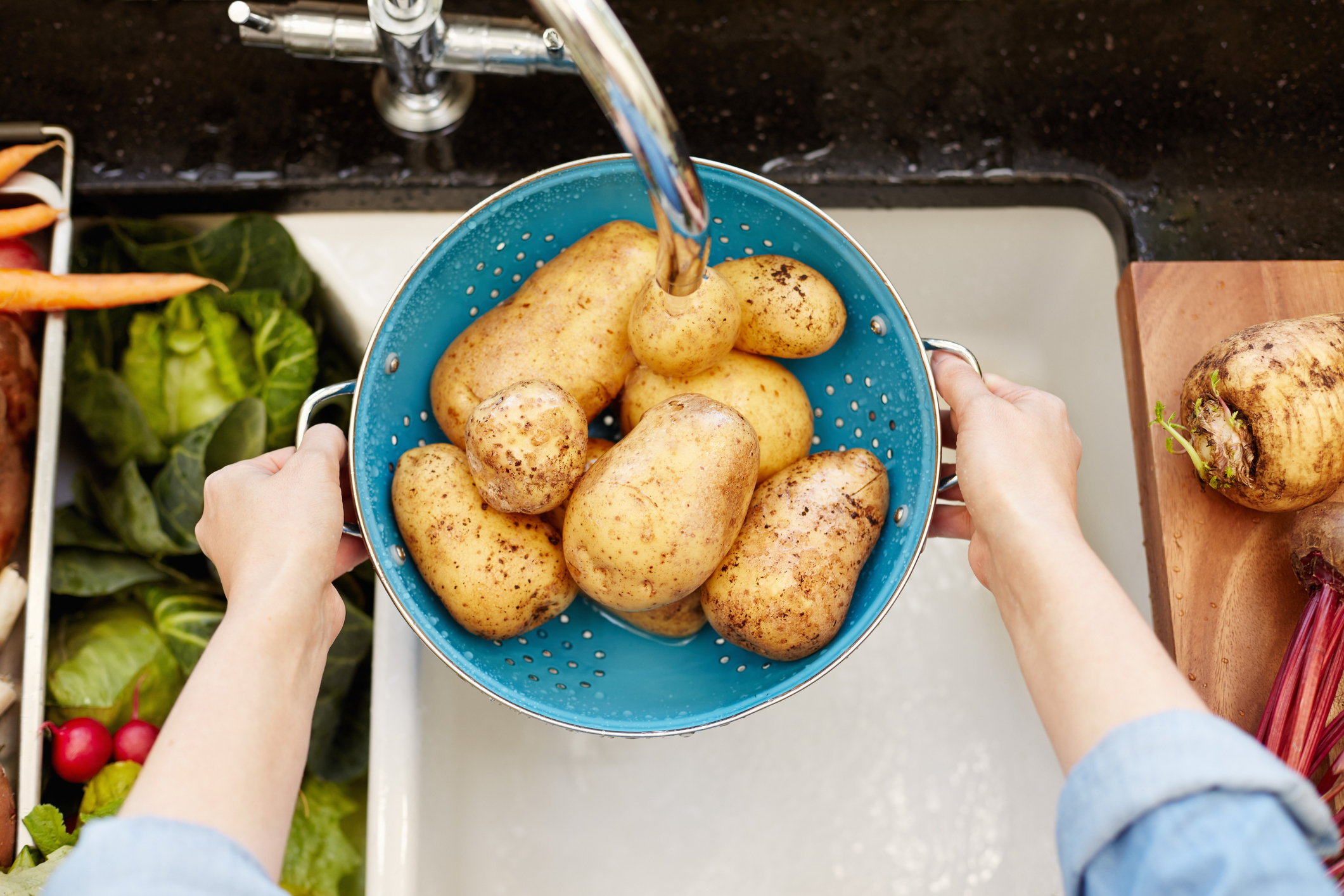
Q: How should I wash my potatoes?
A: To wash your potatoes, do this:
- Wait to wash your potatoes until you’re ready to cook them.
- Scrub your potatoes with a vegetable brush or clean scouring pad.
- Rinse your potatoes under cold running water.
- Pat your potatoes dry with a clean paper towel or kitchen towel.
However you slice, dice, boil, fry, crunch, mash, or purée your potatoes—with or without the skin—you’re making a smart and affordable food choice.